Supply ChainAssets
What the company owns, who has it, and what it is now worth.
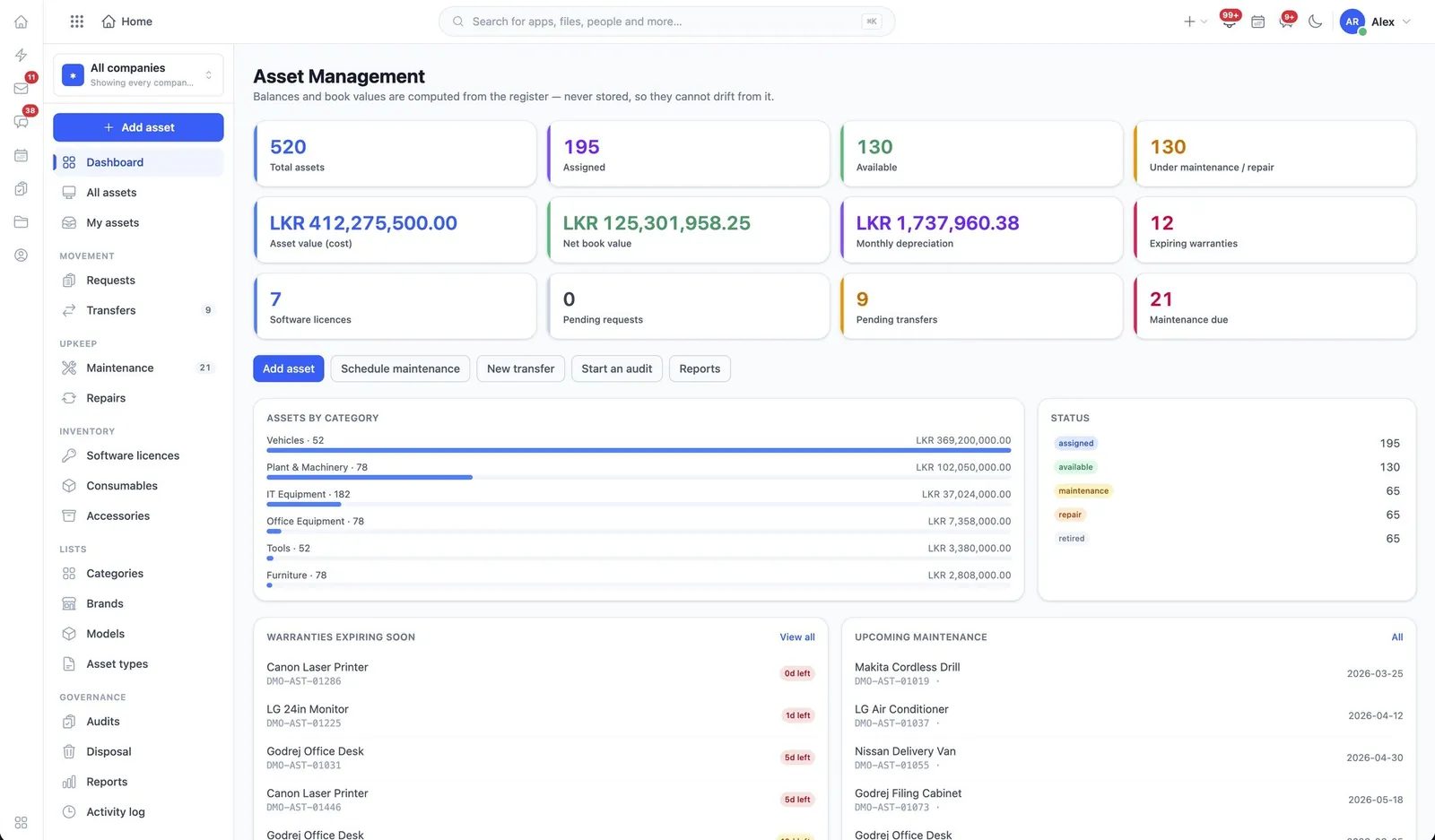
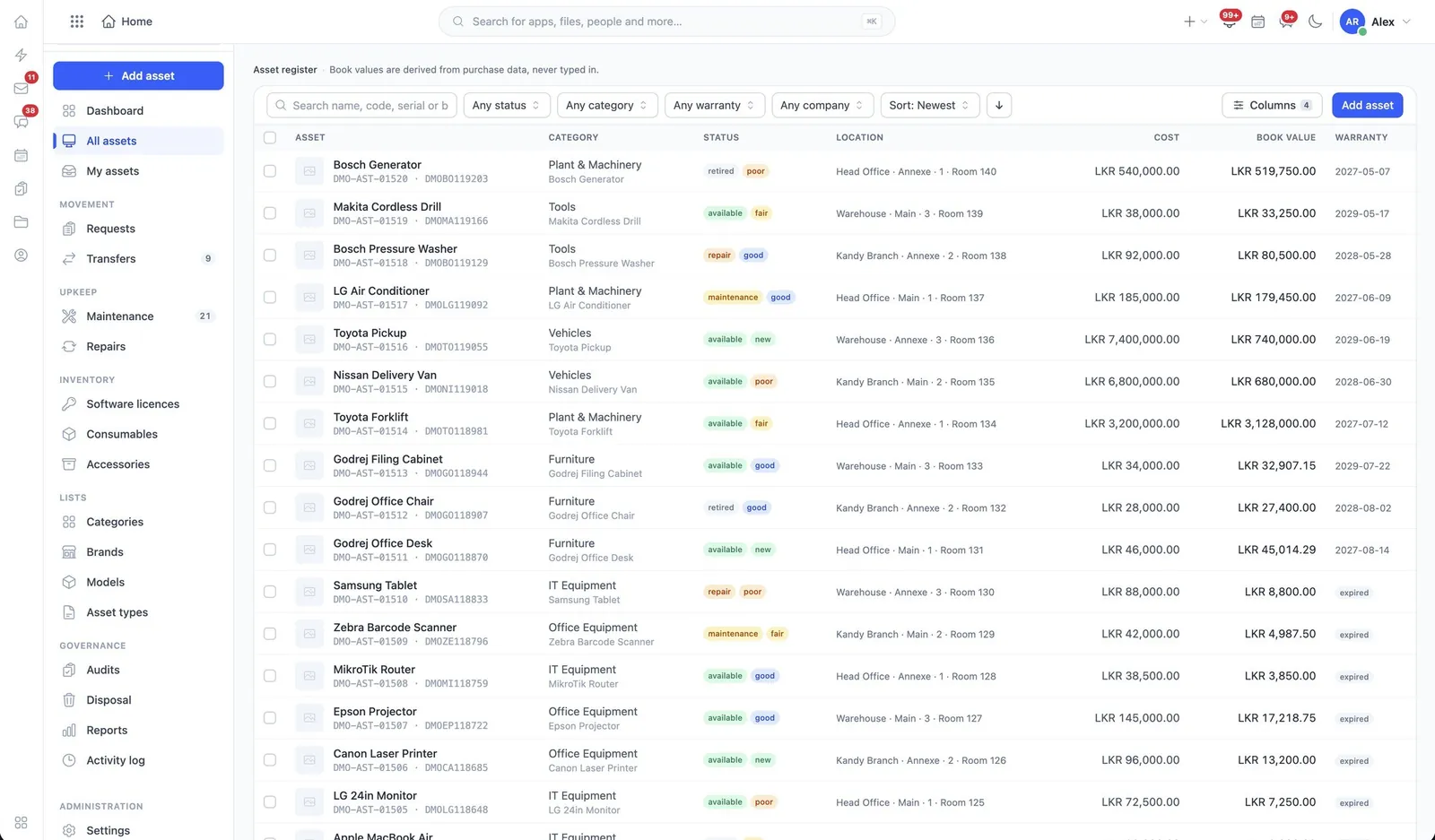
Assets is what the company owns rather than what it sells: the register, who currently has each item, what maintenance it is due, and what it is now worth.
Read the user guide asset
What it does
Assets, in the product’s own words
- An asset register, viewed and maintained
- Issue and return assets to people
- Maintenance scheduled and completed
- Values, depreciation and disposal
- Audits run against the register
- Requests, transfers and disposals approved
Before you start
What has to be in place
- The register itself — an asset audit against an incomplete register measures the register, not the assets.
- Depreciation treatment agreed with whoever owns the books.
In the user guide
6 tasks, explained
- 01Maintain the register
- 02Issue an asset to a person and take it back
- 03Schedule and complete maintenance
- 04Track value, depreciation and disposal
- 05Run an audit against the register
- 06Approve requests, transfers and disposals
More of Assets
Works with
The same records, not a sync
InventoryProducts, warehouses and what is actually on the shelf.EmployeesThe employment record, from onboarding to attendance — 26 permissions, the most finely divided module in the suite.AMC & ServiceAnnual maintenance contracts, the equipment they cover and the visits they entitle.AccountingThe books: chart of accounts, journals, periods, reconciliation and reporting — 24 distinct permissions.
Industries that start with it