What “one system” actually means
Most suites are a set of products with connectors between them. Here is the difference that makes, traced through a single sale.
Livezen Technologies
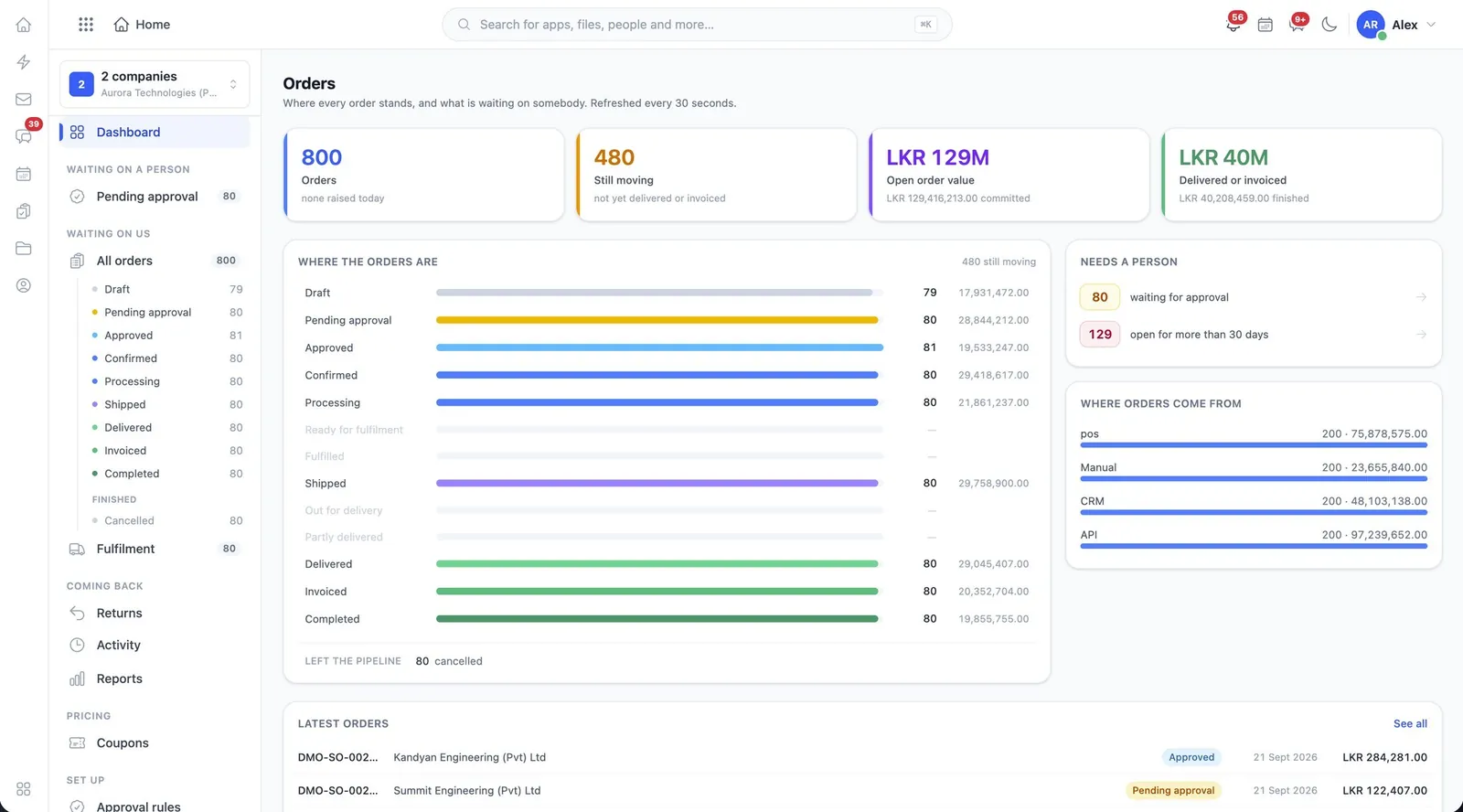
Every business platform says it is integrated. The word has been worn smooth. So it is worth being exact about what WorkSuite means by it, because the difference shows up on a Tuesday afternoon when somebody asks why two screens disagree.
Follow one sale
A customer orders twelve units. In WorkSuite that order reserves twelve units of real stock in a real warehouse — not a number copied into a sales system overnight. Confirm it and the reservation becomes a movement. Raise the invoice from the order and it carries the same lines, the same prices and the same customer, because it is reading the same record rather than a copy of it.
Record the payment and it allocates against that invoice. The allocation posts to the ledger. Open Accounting and the entry is there, against the account the product category maps to, in the company the order belonged to. Nothing was exported, nothing was synced, and there was no window during which the two systems disagreed — because there are not two systems.
What that removes
- The nightly sync that is fine until the night it is not.
- The second copy of the customer list, which is always the one somebody edited.
- The reconciliation between what sales think they sold and what the books say.
- Re-entering the same order into a second product because the first one does not do invoices.
The same applies sideways
Payroll and expenses post to the same accounts as trading. A project’s spend is computed from its tasks, timesheets and claims rather than stored, so it cannot drift from them. An asset’s book value is computed from the register. The dashboards are not a reporting layer with its own numbers; they are the records, added up.
The apps are not integrated — they are the same system.
That is also why each company in a multi-company installation keeps its own books, staff and numbering, and why seeing across them is a permission rather than a setting. One database does not mean one pile.